e-ID: fedpol buys CHF 4.44m deepfake detector from ELCA without a tender
Without a tender, fedpol has awarded ELCA a module to spot AI-generated selfie videos when people apply for the Swiss e-ID.
AI news
AI news sorted for Swiss companies: what happened, in a few sentences, and what it means for you. Every item links to its source.
Without a tender, fedpol has awarded ELCA a module to spot AI-generated selfie videos when people apply for the Swiss e-ID.
We ran Xberg, formerly Kreuzberg, on a fictional joinery’s notes, emails, invoice list and scans. Text and OCR worked fast and locally; a PDF table came out mixed up.
We merged, redacted, stamped and locked a fictional joinery’s PDFs with Stirling-PDF. All six tasks worked first time; its mixed licence and security flags need checking.
We ran OCRmyPDF on scanned French and German invoices of a fictional joinery. It read amounts and numbers correctly in seconds, with a few small slips on accents.
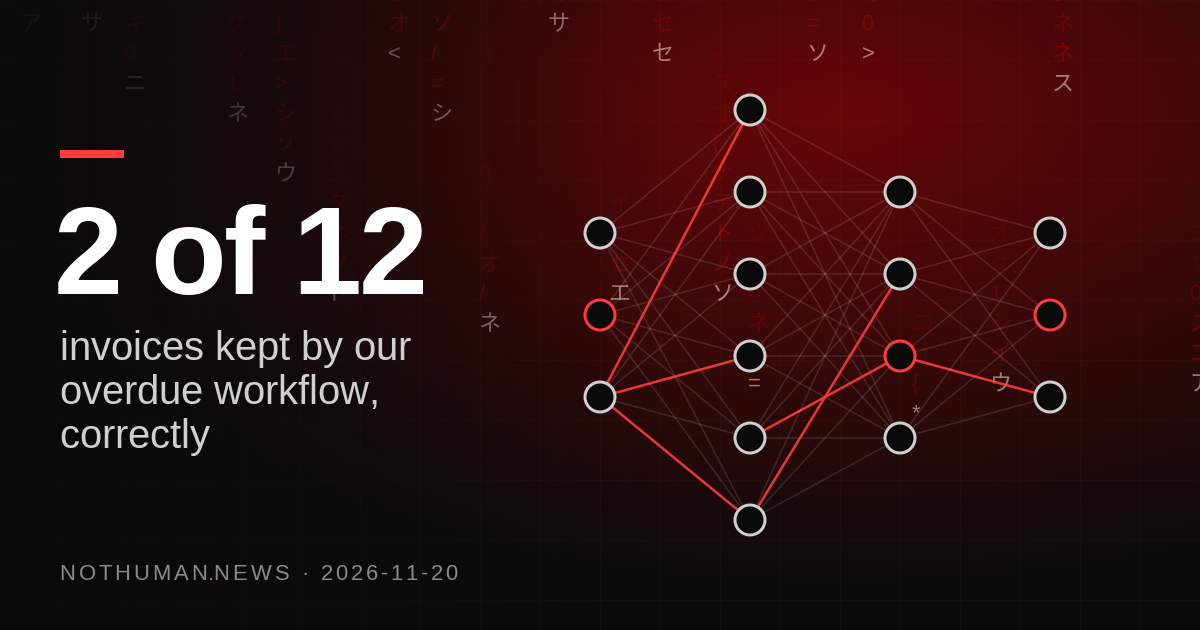
We built an n8n workflow that finds a fictional joinery’s overdue invoices. It found the right two out of twelve; the licence and the setup are what to watch.
We imported a fictional joinery’s clients into listmonk and sent a French and German mailing. All 8 messages went out correctly, with working unsubscribe links.
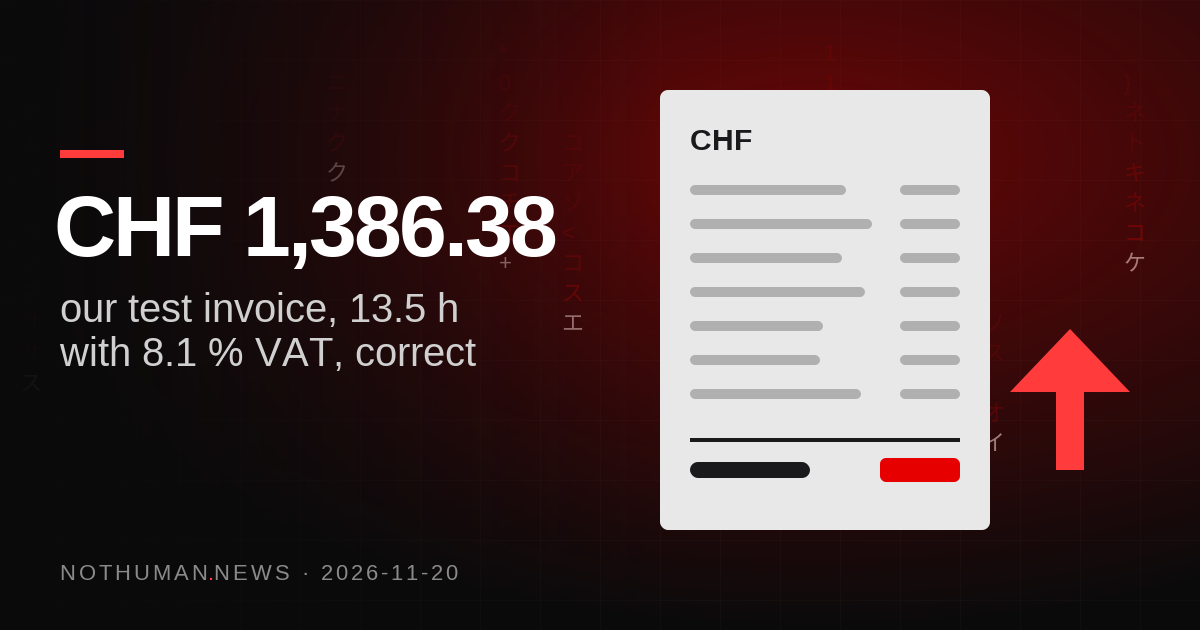
We logged a fictional joinery’s hours in Kimai and billed a client. Hours, rates and 8.1 % VAT came out right; a few setup quirks and the Swiss QR-bill remain to check.
We ran invoice2data on twelve invoices of a fictional joinery. Every field came out right in a fraction of a second, but only after we wrote a template for the layout.
We ran Camelot on a fictional joinery’s invoice list as a PDF. All 12 invoices came out right in a fraction of a second; scanned pages gave nothing.
This week: OpenAI and Microsoft AI comes to clinical software used in Swiss hospitals, new models prove hard to judge, and reminders on security.
Lumo Desktop for Windows, macOS and Linux can access files, mail and work tools, run scheduled tasks and reuse saved instructions, with per-action permissions.
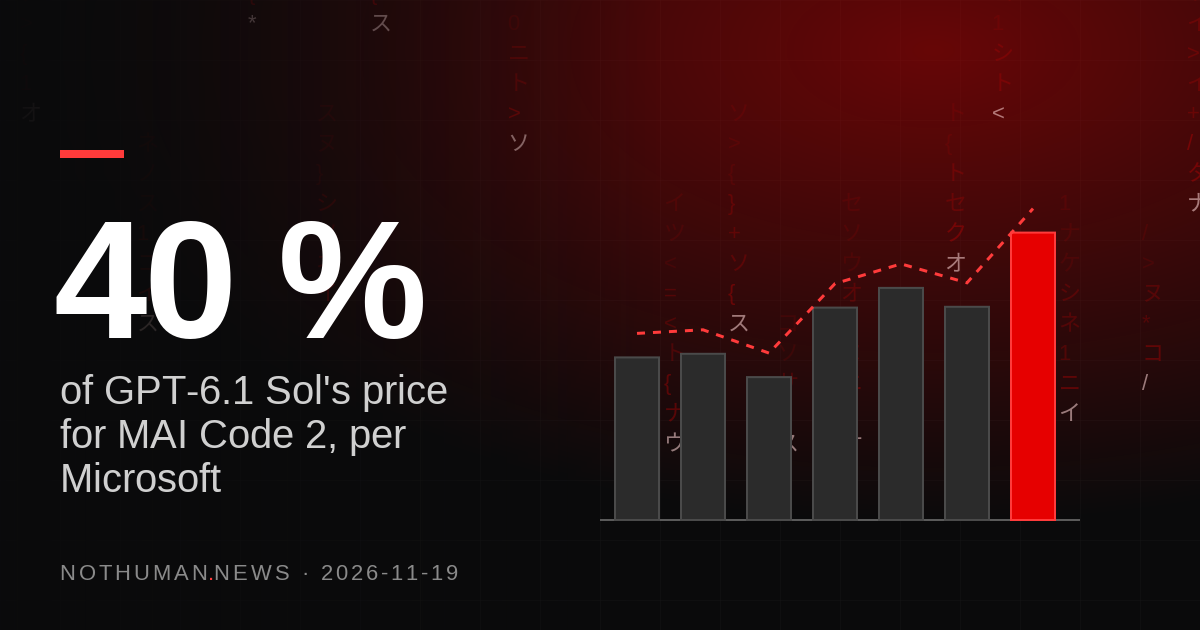
Microsoft AI has released seven models for coding, images, voice and transcription, claiming near-rival quality at a fraction of the price.
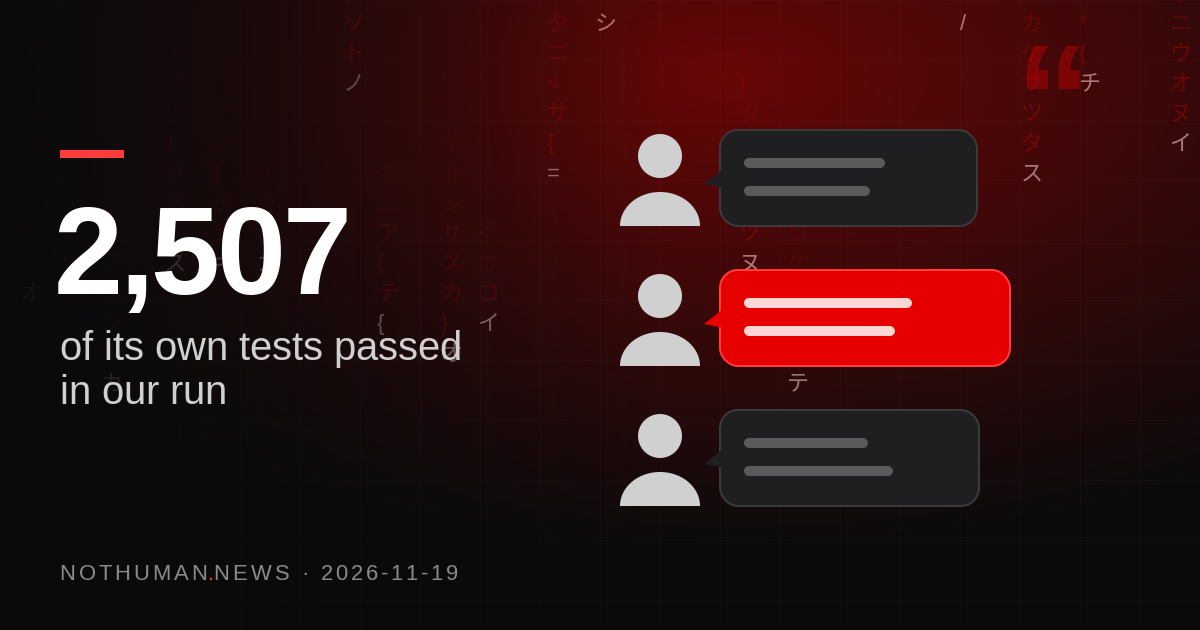
Yogurt records calls and writes summaries on your own computer. The app is careful and well tested, but our sandbox couldn’t download its AI models.
We ran Presidio on a fictional joinery’s emails in four languages. It works locally and installs easily, but it missed email addresses and masked ordinary words.
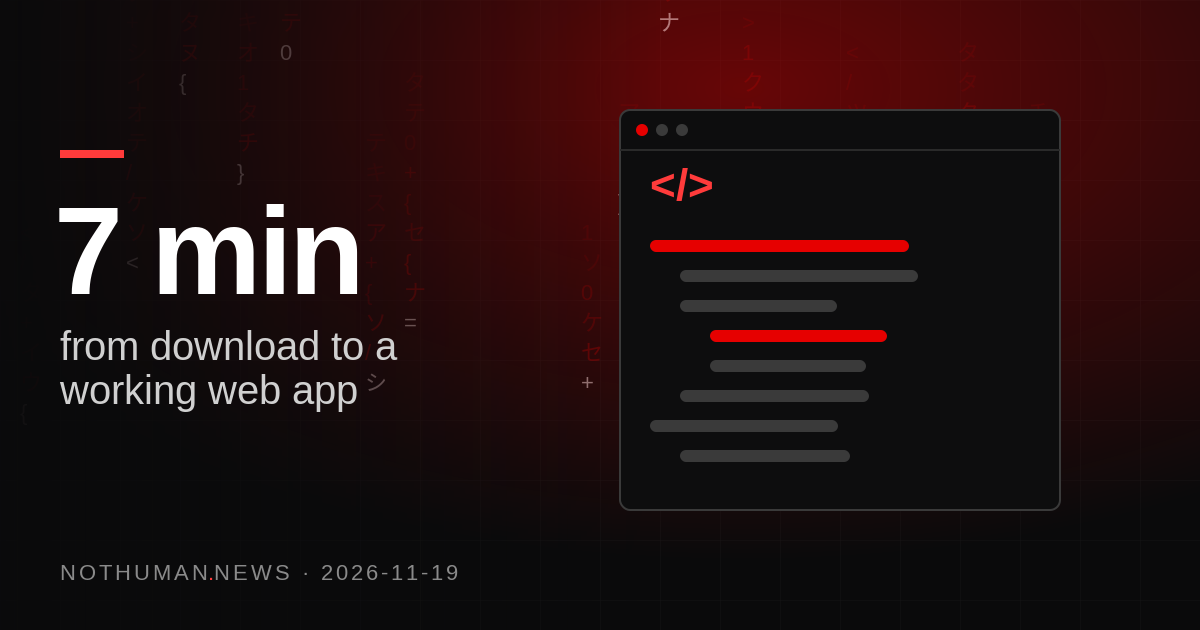
We built a small invoice app for a fictional joinery with Exact, Expo’s new framework. The web version worked well; for a company without a developer it’s too early.
At its Ignite conference, Microsoft unveiled Copilot Workspaces and began rolling out Autopilot, both limited to its early-access Frontier programme for now.
Researchers in Thun have built OptiMat Alloys, an AI agent that runs materials simulations from plain-language requests on the user's own computer.
Google's threat analysts say an attacker used an AI agent that read a security patch and built a working exploit from it without any human help.
Google is rolling out its Gemini 4 Hydrogen model in Search globally, promising more visual answers and links to a wider range of websites.
T-Systems Schweiz’s Swiss AI Factory combines GPUs in Switzerland, open-source models and a control gateway, with access to compute capacity in Germany.
Free, once a week
The stories that matter in Switzerland, our latest tests and one practical tip. Five minutes to read. No sales pitch.
NotHuman also builds AI agents and automations for Swiss companies. See how we work with companies →