A Lausanne start-up is betting that factories do not need a robot that walks, but one that can work next to people and learn a job by being shown it. Embodied AI unveiled its robot AIR on 6 November at Humanoid Europe 2026 in Munich. For manufacturers with varied manual tasks that classic industrial robots cannot handle, it is a different route to automation, though not yet one with a CE mark.
AIR has a torso and two light arms on a wheeled base; it has no legs. The heavy parts sit in the torso and the arms are built to give way on contact, which the company says lets the robot work beside staff without a safety cage. Investor Look AI Ventures describes the tendon-driven arm as weighing 2 kg and lifting 5 kg. To learn a task, AIR is first steered by a remote operator. Every shift is recorded as training data, and within about a month, according to the company, the robot takes the task over on its own. Depending on the task, one AIR can handle the workload of up to three people per shift, the company says. Orders open after the launch; no price or delivery dates have been published.
Embodied AI has 25 staff and describes itself as born at EPFL, where its 28-year-old CEO Francesco Stella did his PhD in robotics. Its investors include Faber VC and the Czech fund Look AI Ventures. The company says its AI software already runs in a two-armed robot cell on a customer’s production line, and that its robots reach an average success rate of 95% in paid pilots with a consumer electronics maker and an automotive and industrial supplier. That figure refers to its earlier robots, not to AIR.
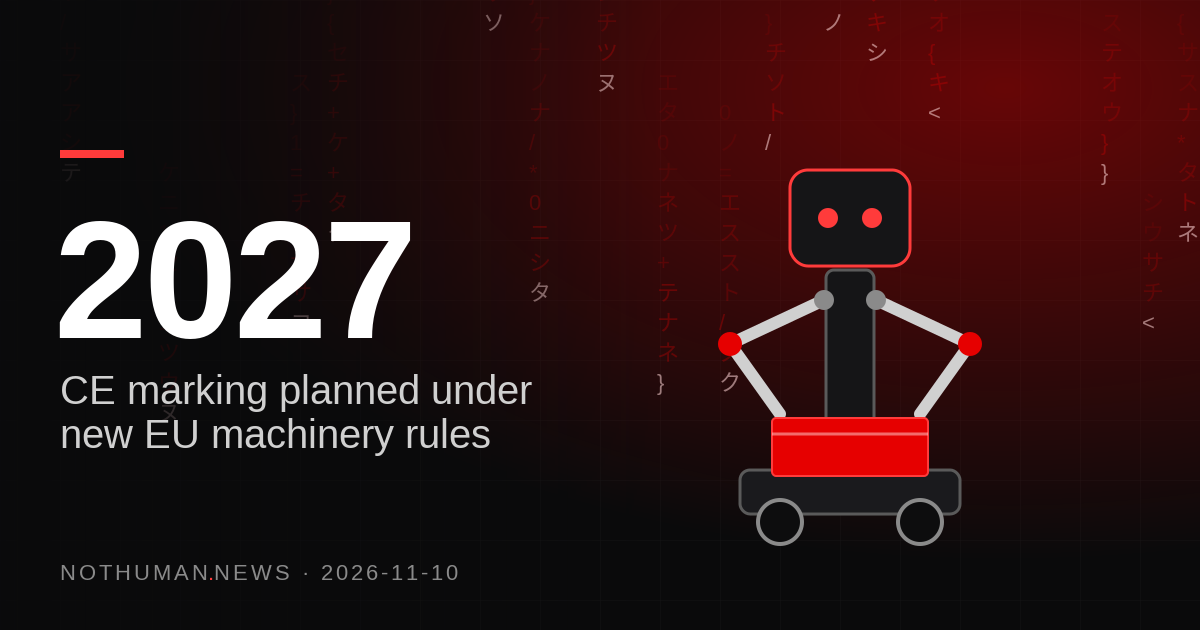
CE marking is planned for 2027, the year the EU’s new Machinery Regulation becomes mandatory, on 20 January. According to the European Commission, the regulation also covers machines with AI-powered safety functions, which matters for a robot that works without a cage and keeps learning on the job.
Much is still unknown. Nearly every performance figure comes from the company or its investor, the pilot customers are unnamed, and there is no independent test. Dimensions, battery life and total payload have not been published. Nor is it clear who operates the robot remotely during the learning phase, from where, and what images and data from the factory floor leave the site.