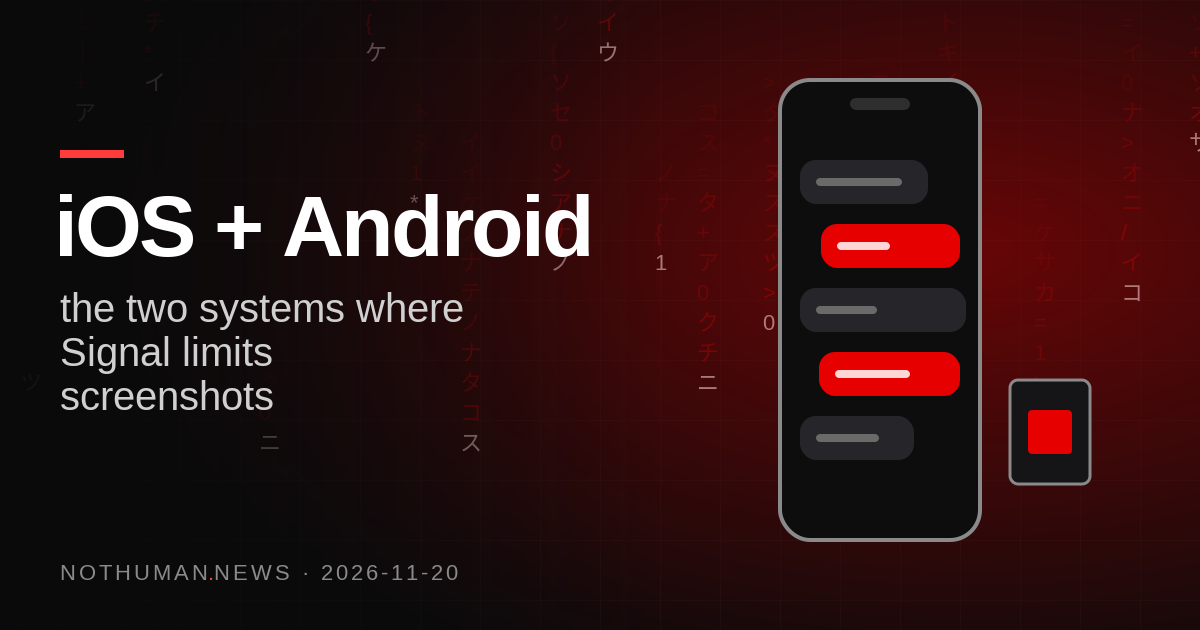
Signal, the encrypted messaging app, is restricting the ability to take screenshots in its app on Android and iOS. According to The Verge, the aim is to stop AI agents built into phone operating systems, such as Google’s Gemini and Apple’s Siri, from reading users’ messages and other data shown on screen. For companies that rely on Signal for confidential exchanges, the move highlights a gap that encryption alone does not close.
The issue is the new generation of agentic features that operating systems are adding. According to The Verge, these functions analyse what appears on the screen in order to learn more about the user. Signal’s president, Meredith Whittaker, said such capabilities are “undermining Signal’s ability to independently guarantee privacy”.
Whittaker went further on Bluesky. She described AI agents at operating-system level, capturing sensitive data from apps such as Signal, as an existential threat to privacy. In her view, operating-system vendors are integrating these agents recklessly, without offering Signal and other apps proper ways to block AI access to their data. Restricting screenshots is, she wrote, what Signal can do with the tools it has.
The underlying tension is simple. End-to-end encryption protects a message on its way between two phones, but once the message is displayed, the device itself can see it. If the operating system includes an assistant that reads the screen, an app has limited control over what that assistant captures. Signal’s decision suggests that, for now, blocking screen capture is one of the few levers available to app developers.
Several points remain open on the information available. It is not clear exactly which functions are blocked, whether users can switch the restriction off, or how it affects ordinary screenshots taken for legitimate reasons. The material we have also contains no response from Google or Apple, and nothing on whether they plan to give apps a dedicated way to opt out of AI screen reading.