OpenAI has released GPT-6 Cyber, a model trained to find vulnerabilities in software, prove that they can be exploited and propose fixes. Few Swiss companies will ever use it, but they will feel its effects: OpenAI itself speaks of a limited window in which such models can be used to secure software before they are widely misused.
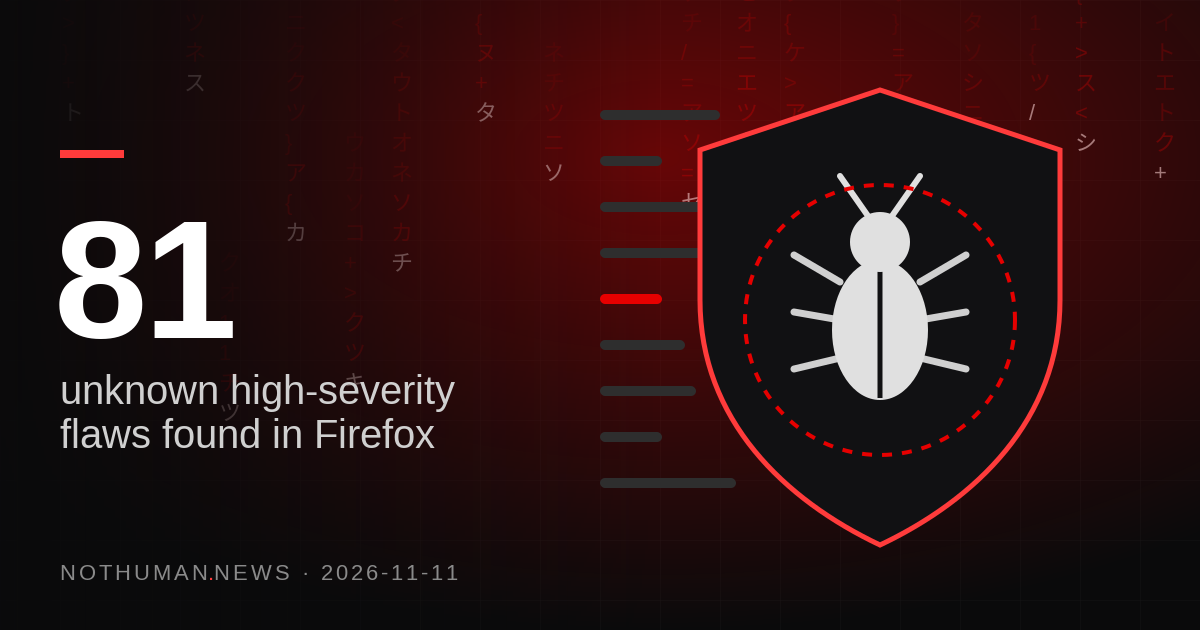
The results OpenAI published on 5 November are striking. According to the company, its researchers used the model to document 81 previously unknown flaws in Firefox that Mozilla rated high severity, and to show that 30 known issues were more serious than assumed. Mozilla has started shipping fixes. In the Linux kernel, GPT-6 Cyber reproduced 1,724 vulnerabilities and built working exploits for 948 of them, against 166 for GPT-5.6 Sol with the same set-up. On ExploitGym, a test of attacking a given flaw on a remote target, it scored 48.5%, up from 32.1% for GPT-5.6 Cyber.
That power is why OpenAI rates the model “critical” for cybersecurity under its Preparedness Framework, one level above its predecessor. Access is limited, through the API and Codex, to a small group of approved customers of its Daybreak Red programme, with identity checks, multi-factor login and a required list of allowed IP addresses. Security teams at Cisco, Calif and CodeRabbit already use it. The model was also trained to stay within the scope its user is allowed to test: in a trap test with deliberately weak side services, it left them alone in 99.93% of runs without its safety prompt, and in every run with it.
All of these figures come from OpenAI, and its system card is more cautious than the announcement. On flaws disclosed between June and August 2026, the model scored 42%, barely ahead of the general GPT-6 Astra at 39%. An external evaluation by the security firm Irregular found no successful attack on fully hardened targets. The card also notes that GPT-6 Cyber is slightly less likely than Astra to stop when a warning says it should.
For a Swiss SME the effect will be indirect: more patches, arriving faster, for widely used software such as browsers and the Linux kernel. The other side moves too. Dragos, which tested OpenAI models in a simulated power plant, says the skill needed to scout a target before an attack is falling. OpenAI wants to open its programme to organisations of all sizes, but gives no date.