Google has released Gemini 4 Carbon, which it calls its strongest model, to developers, businesses and its top-tier consumer subscribers. For Swiss companies, two points in Google’s own announcement matter most: most office and software work still belongs on the lighter Gemini 4 Argon, and Carbon’s introductory API price runs out on 30 November.
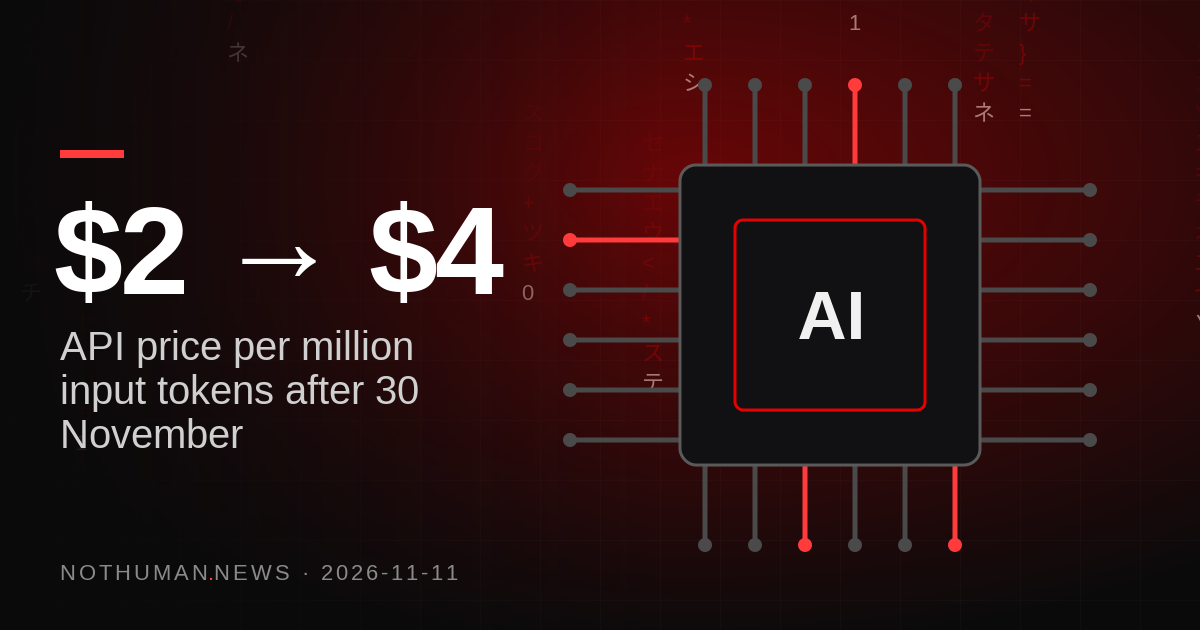
Carbon is aimed at hard, multi-step work such as complex coding, debugging and open-ended research, and at cybersecurity; it spends more tokens to reason and to check its answers. Security defenders got it two weeks earlier through Google’s Fairwind Program. Developers and companies can use it through the API in Google AI Studio and through Gemini for business at 2 dollars per million input tokens and 10 dollars per million output tokens, the same introductory price as Argon. After 30 November the price rises to 4 and 20 dollars. Google AI Ultra subscribers get it in the Gemini app, AI Mode in Search and Google Antigravity, where a preview feature coordinates a team of agents from a single prompt.
Google says Carbon ranks first on three agent benchmarks run with partners, CursorBench 4.0, Perplexity’s WANDR and Zapier’s AutomationBench, at less than half the cost per task of the next best outside model, which it does not name. On a multimodal knowledge benchmark built with Artificial Analysis, it ranks second. On safety, Google reports that Carbon passed 92% of a 375-task honesty test, against 70% for Argon, and blocked 99% of attack paths in simulated cyberattacks.
Google presents the two models as tiers rather than successors: Argon for daily work, Carbon for jobs where longer reasoning pays off. Its cost argument rests on price per completed task, not per token. A model that uses more tokens can still come out cheaper if it finishes a job in fewer attempts, but that depends heavily on the task, and the comparison only holds for the benchmarks Google chose.
Several questions stay open. The benchmark results come from Google and its partners, and independent comparisons will take time. Google itself says resistance to prompt injection, where hidden instructions in a document or web page hijack an agent, still needs work. The post says nothing about where data is processed or about availability in Switzerland or Europe, and the doubled price from December will change the arithmetic for anyone running Carbon at scale.


