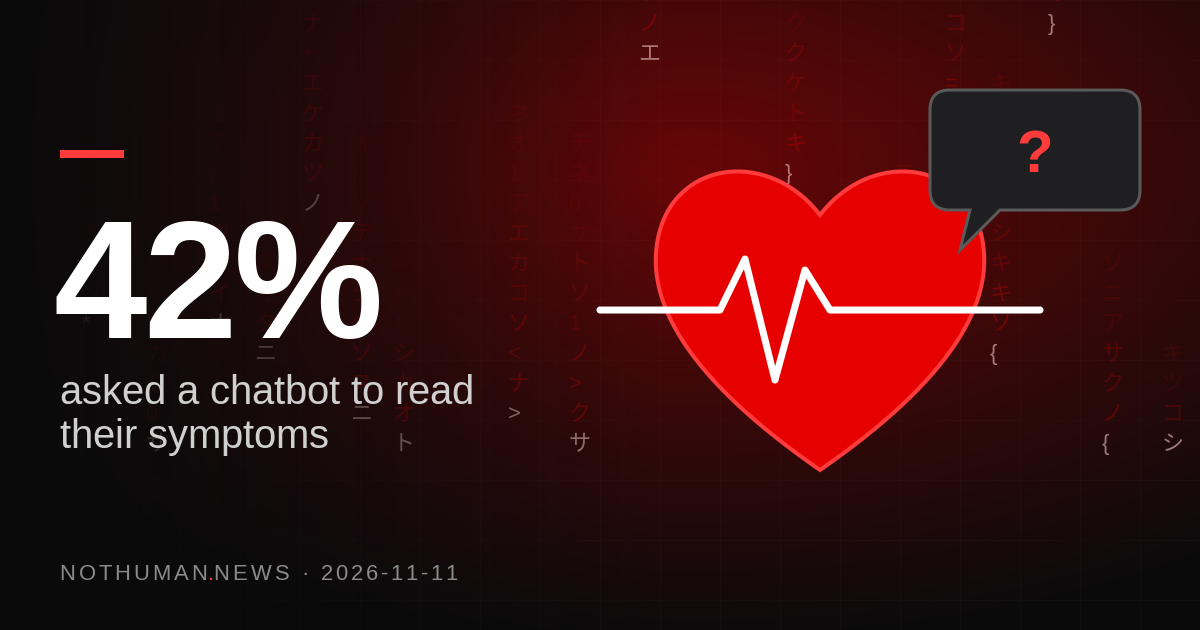
Chatbots have become a routine stop on the way to the doctor. In the CSS Health Study 2026, 42% of people in Switzerland say they used an AI chatbot at least once in the past year to get a first diagnosis of their symptoms, double the 20% of a year earlier. For employers, it is a reminder that staff are typing very personal information into AI tools, often the same ones they use at work.
The study, the eighth in the series, was carried out for the health insurer CSS by the research institute Sotomo, which surveyed 2,459 people online in German-, French- and Italian-speaking Switzerland between 18 June and 9 July 2026. The sample was weighted to be representative, with a margin of error of about two percentage points. Use grew in every age group: 62% of 18- to 35-year-olds turned to a chatbot for symptoms, a third of them more than once, and among the over-65s the share tripled from 10% to 30%. A third of respondents (32%) asked chatbots about lifestyle topics such as nutrition or exercise, and 14% sought support when they felt emotionally or mentally unwell, 22% among the under-36s.
Trust is growing too. 28% now count chatbots among their most important sources of information on physical symptoms, up from 18%; for psychological symptoms the share rose from 11% to 16%. Doctors, the internet and people close to them are still named far more often, which Sotomo reads as a sign that chatbots complement rather than replace them. Looking ahead, 37% can imagine turning to a chatbot for a physical complaint and 24% for a psychological one.
The conversations are also intimate. Almost one in five people who use AI privately (18%) told a chatbot something they had told no other person; among those who felt lonely, the share was 30%. And 27% of lonely private users said talking to a chatbot sometimes made them feel less alone.
The study measures use, not outcomes. It does not say which chatbots people used, how often the answers were right, or whether they led people to see a doctor sooner or later. CSS itself calls the trend both an opportunity and a risk, since telling reliable information from wrong answers becomes decisive. The authors leave open what the long-term effects on the health system will be.