Fraudsters are gearing up for Singles Day, Black Friday and Cyber Monday with fake online shops that look more convincing than ever, the Federal Office for Cybersecurity (BACS) warned in its weekly review of 10 November 2026. For Swiss SMEs the risk runs in two directions: their staff and customers can be tricked, and their own shop can be copied.
According to the BACS, reports of fraudulent shops and of phishing in the name of logistics companies have piled up in recent days, and it already sees a clear rise in prepared scam campaigns. It gives no figures. What has changed is quality. Fake shops used to give themselves away through spelling mistakes or ill-fitting images; now criminals use AI to produce flawless text adapted to each region, realistic product photos and genuine-looking customer reviews. They copy the layouts of well-known Swiss retailers and register domain names that refer to Switzerland. The bait is sought-after goods at implausibly low prices: home electronics, furniture, sports gear, bikes, branded clothing, watches and jewellery. Anyone who pays in advance, by card or in cryptocurrency loses the money and gets nothing, or at best inferior goods.
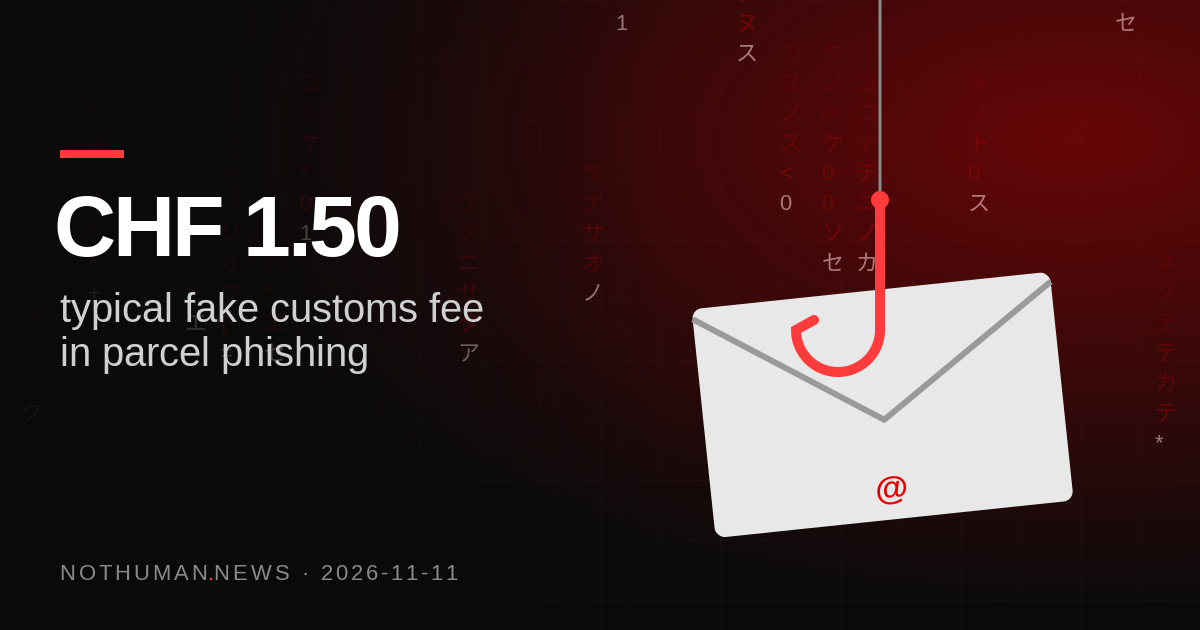
A second wave targets the deliveries that follow. Mass texts and e-mails in the name of Swiss Post, DHL or DPD demand an unpaid customs fee, usually a small sum such as CHF 1.50, or an address confirmation. The link leads to a manipulated site that harvests full card details or traps victims in hidden subscriptions. The BACS advises paying on invoice where possible, being very careful with shops that accept only prepayment by card, Twint or instant transfer, checking parcels only on the carrier’s official site or with a tracking number from the merchant, and never entering card details to pay such a fee.
This builds on earlier BACS guidance. In July 2025 the office explained how to spot fraudulent websites: an unusually high number of five-star reviews can itself be a warning sign, since fake shops buy or generate reviews, and suspicious domains reported to it that were less than three months old were almost always scams. A .ch lookup shows only the first registration date, not a recent change of owner.
The weekly review leaves gaps. It does not say how many shops were reported, which retailers were copied or how much money was lost. And it speaks to consumers: it gives no specific advice to companies whose layout or name is being cloned, although their reputation is at stake as well.